

.png)

January 21, 2026

Over past centuries, we have lost not only nature, but our collective memory of what a truly wild, healthy landscape looks like. In Sussex, species have disappeared, woodlands have become fragmented and quieter, and vital natural processes have ceased. Through the Lost Woods project, we are working to restore our connection to nature and help make woodlands wilder again. Fran Southgate, our Wilder Woodlands course trainer, explains more:
There has been a very tangible loss of both nature, and our connection to it over many centuries now - so that we don't really know what a wild and healthy landscape really looks like. This loss of connection to nature is true of the Low Weald and Downs area, but something that we are trying to remedy with the Lost Woods project.
There is a collective forgetting of our wildlife neighbours called Shifting Baseline Syndrome- as these groups of species disappear with each new generation. We have had huge losses in what would have once been common species, which means we have also forgotten how to live alongside them.
It is hard to sum up what has truly been lost - there are probably untold numbers of medicinal plants, pollinating insects, woodland birds and more. There are some keystone species, and key natural processes which we know are no longer there.
Beavers and herbivores
Keystone species are species which positively influence our landscapes for the benefit of people AND wildlife. There are a number of these which we are trying to help return. These include the native beaver - our native wet woodland coppicer and water engineer; and grazing herbivores of pasture woodland and our wilder woods which help to browse, rub, tear, trample, roll, dung and nibble woodland to create lots of important micro niches for other species.
Deadwood
Key natural processes that we have lost are the degradation of deadwood - most trees or branches that fall down are tidied up, or used for firewood. Deadwood is a hugely important element of a woodland - providing habitat for important fungi and insects which in turn help to break down woodland nutrients and create more woodland food and forage. A characteristic of our wilder woods that I personally miss is the lack of 'wonky' trees. We have had a tendency to grow our trees straight and to tidy up things that fall down, so that we no longer experience the tumble jumble of an unwieldy wildy wood.

Isolated woodlands
We have lost connection between our woodlands, as well as connection too them. The progressive felling of trees, and the urbanisation of our landscape has left us with much smaller wooded areas, often isolated in pockets of intensively farmed/inhabited land, or bisected by roads and busy pathways. These little islands of woodland then become much more vulnerable to extinction events, damage, pollution, climate change etc. , and any species living in them find it much harder to migrate between woodlands if they need to. This project, and many others like it are trying to restore the links between our woodlands, and to buffer and connect them again.
Disappearing wet woodlands
We have lost a great deal of water from our woodlands too. England's extensive history of foresting our woodlands, along with the mechanisation of wood extraction has encourage us to drain large areas of woodland of all its water, in order to make them more accessible for human activity. Most woodlands have man-made ditches which are dry for most of the year, instead of patches of vibrant wet woodland, or small, singing woodland streams. Water is the source of life, so restoring our water to our woodlands through our 'behaving like beavers' leaky dam workshops and other events is really crucial, particularly in the face of climate change.
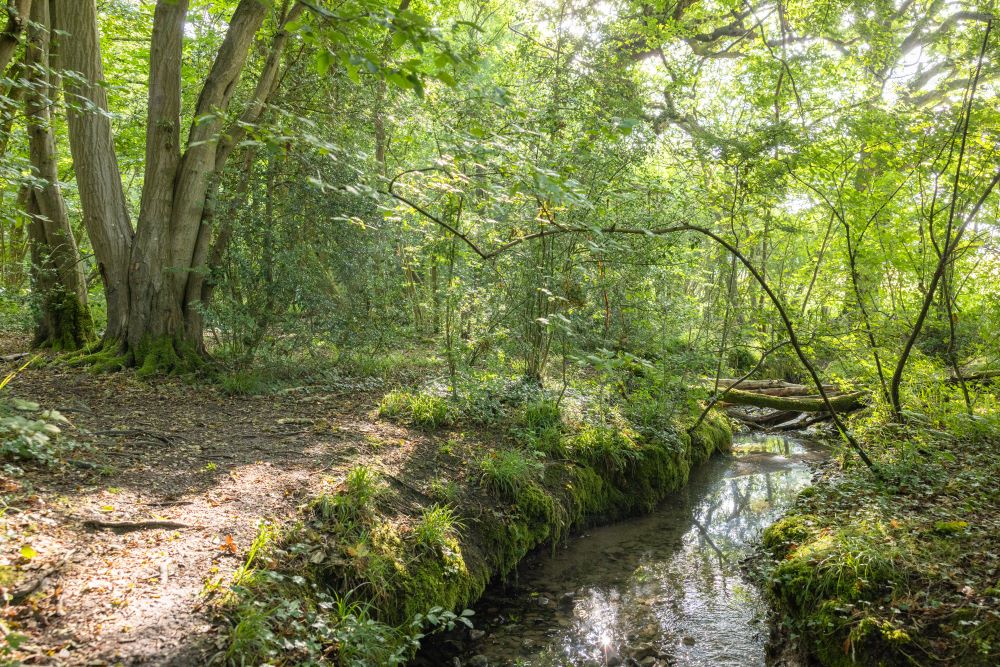
The sound of a healthy, wild wood
There are also things that we forget we have lost such as stillness, quiet, and darkness. Those soothing elements of a woodland to which we go for 'Green medicine'. Noise and light pollution now permeate all our small woodlands in the Low Weald - as well as air and water pollution from roads, farming etc. And there are many noises we no longer hear - the tapping of the lesser spotted woodpecker, the falling of a behemoth of a tree, or the snorting of the wild boar.
All is not yet lost
There are however things that we haven't lost from our Low Weald woodlands. The Jays still carry on planting the acorns, the wind still blows over some of the trees, and the mycorrhizal fungi still help the trees to talk to each other ! The joy of scrunching through autumn leaves and the excitement of seeing the first green buds and bluebells of spring is there every year. And our passion to help you connect to your local woodlands has not been lost.
So we look forward to seeing you at a woodland near you some time soon.
You can learn more about restoring natural processes in woodlands on our project partner Sussex Wildlife Trust's website.
Stay up to date with project news, subscribe to the Lost Woods e-newsletter
.jpg)
.jpg)
.jpg)
.jpg)